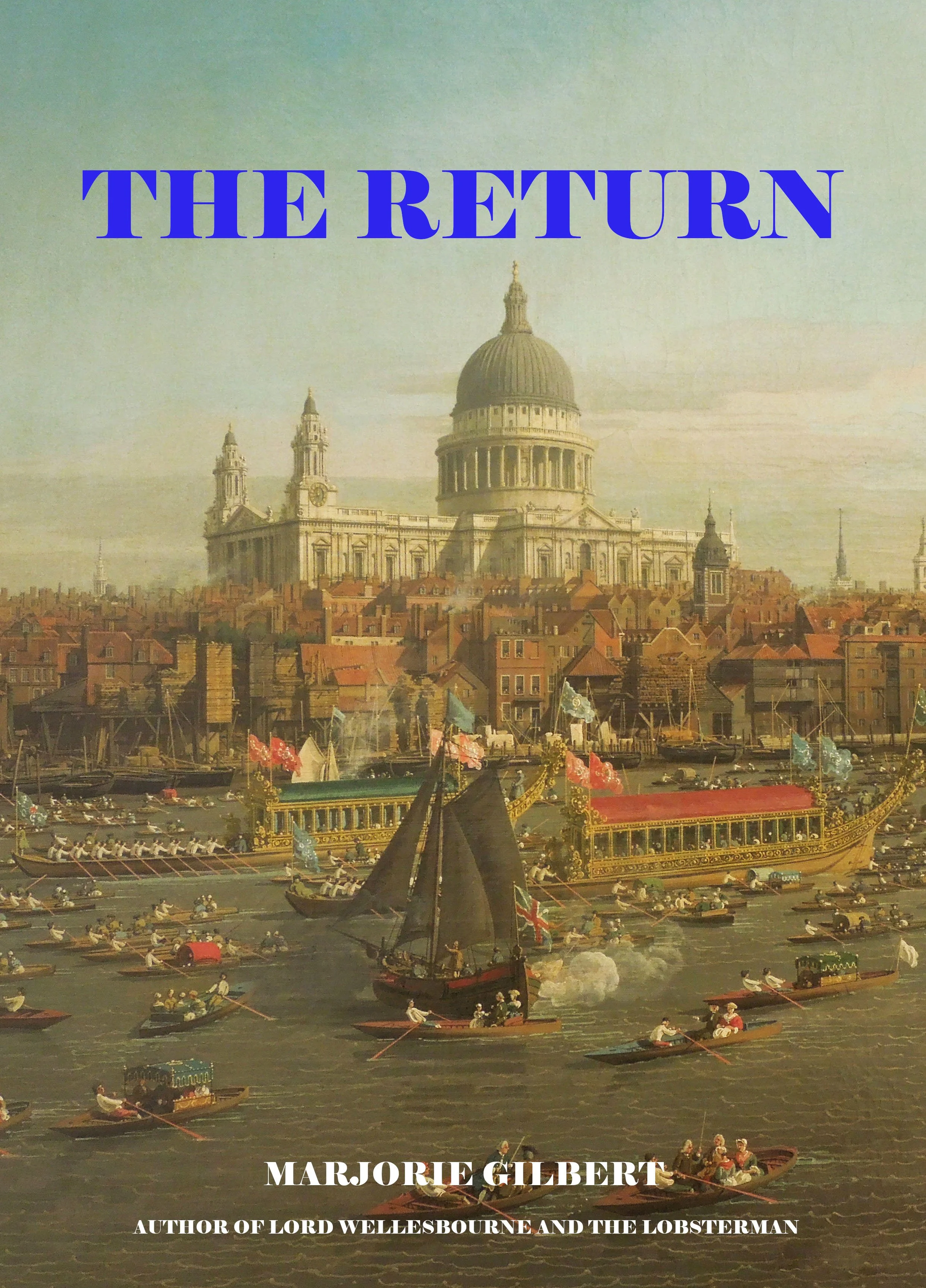
THE RETURN
Ten years is a long time to be away from home, when you leave as a boy and return a man.
In 1790, Lord John Latham, the fifteen-year-old second son of a marquis, sailed to the West Indies. There he lived a very different life from the privileged one left behind. He became the manager of the familys sugarcane plantation. He also discovered boxing.
The demands of the plantation, and the brutality of the boxing ring, helped shape the brash, over-confident boy into a thoughtful, confident young man.
When Latham returned to England in 1800, his privileged life was once again thrust upon him--a life at odds with his formative years. and is complicated still further by the reappearance of Isobel.
Returned, it is a world in which Lord John Latham must decide if he can remain.


Praise for The Return
Marjorie Gilbert has captured the pleasures--and frustrations--of 19th century British society, to which she introduces Lord John Latham, an entirely appealing young man. By the end of his first few days back home, you'll want to adopt him--or vie for his attentions.
--Judith Green, author of Hit the Street
The Return, by Marjorie Gilbert, is the story of a man who returns to Regency England after some time away. He must balance his ideas, needs, and experiences with what is expected of an English gentleman. He must also face his feelings for his childhood friend, knowing that there is a profound gap between what he would like to be able to offer her and his true circumstances.
Marjorie Gilbert has undoubtedly done a great deal of research on Regency England. You will feel as if you are there.
-April Kihlstrom, author of 28 Regencies, including the award winning The Reluctant Thief and the Miss Tibbles series.
The Regency era springs vividly to life in THE RETURN, a richly-detailed account of a young man's journey home after years abroad, and the sometimes painful adjustments he must make as he reacquaints himself with the 'Polite World.' The central characters are deftly drawn, and historical personages are sprinkled into the text to add to the reader's delight.
-Diane Farr, author of Under the Wishing Star and Under a Lucky Star
I've read some Jane Austen, and a little Elizabeth Gaskell, and find I thoroughly enjoyed this work.
Latham is an extremely likable fellow, and is surrounded by a host of other very interestingly sketched characters as well.
Great fun, and an easy read.
Well done I say!
-Rich
I think I have never read a promised sequel so well delivered. As this first novel by an equally promising new author closes she notes: ‘After a brief sojourn at the groom's childhood home, the couple sailed to Africa aboard the Betty Anne. As their adventures were far too numerous to be found among the pages of this book, they must be found within those of another.’
I suspect I am telling no tales to reveal that we are talking about Lord John Latham and Lady Isobel Gordon. The entire novel is taken up with explaining how Lord John has returned from managing his father's plantation in the West Indies to discover among other things, that who he thought was the love of his life was a pale imitation of the real thing. His true love always having been before him, but unrecognized.
The Return is set in England in 1800. One would think with the attention that is paid to detail by the author that she has been reincarnated. From whom or from what I am not sure, but the story clearly captures the feel and the sense of the times….
…So if you would like to escape the trials and tribulations of today's world and return to what we think must have been a simpler time, I recommend you to Ms. Gilbert's tutelage.
She has an eye and an ear for the period which when combined with the ability to tell a tale is a lovely combination. Give it a try.
-John R Linnell





Notable People in The Return
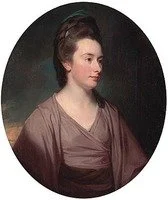
Elizabeth Lamb, Viscountess Melbourne (1751 – 1818)
Elizabeth Milbanke married Penston Lamb in 1769 (he became Lord Melbourne when he was created a Viscount in 1770), Lady Melbourne was a very ambitious and capable woman who managed the affairs of her husband and family. She also entertained such notables as Charles James Fox, George Canning, Charles Grey, Prince George and Richard Brinsley Sheridan. She also had an affair with the Prince of Wales in 1780-1874. He was believed to have been the father of her fourth son, George Lamb, who was born in 1779.

William Lamb, 2nd Viscount Melbourne (1779-1848)
It is doubtful that William Lamb, second son of Lady Elizabeth Melbourne, would have required the assistance of Lord Hawkridge to further his political career. After studying in Glasgow, he returned to England, where, over time, he became MP for Leominster, Chief Secretary for Ireland, Home Secretary, and Prime Minister, as well as Queen Victoria’s beloved friend. Lady Melbourne’s ambitions were, indeed, realized by her favorite son.

William Barrymore (1759–1830)
Originally part of a "strolling players" company, Barrymore came to the Theatre Royal Drury Lane in 1782. He soon became part of the main company of actors. He is a member of the famous Barrymore family.
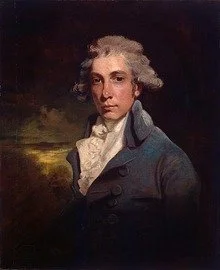
Richard Brinsley Sheridan (1751-1816)
Though Richard Brinsley Sheridan had a brilliant political career, his career as part owner and manager of the Theatre Royal, Drury Lane, ended badly. On 24 February 1809, the theater was almost completely destroyed by fire. But even in the face of such hardship, namely the loss of his theater, Sheridan comported himself with the style for which he had become known. When the fire started, he was in a tavern nearby, and when informed the building was on fire, took a chair and his drink outside, and seated himself. Upon being asked to explain this behavior, Sheridan replied, “May not a gentleman enjoy a glass by his own fireside?”
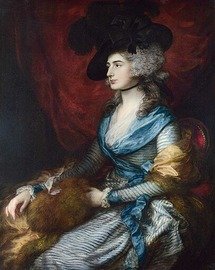
Mrs Sarah Siddons (1775-1831)
Sarah Siddons (née Kemble), was engaged by David Garrick for performances at the Theatre Royal, Drury Lane in 1775-1776. It
failed. She returned in 1782 for the for the role of Isabella in Southern’s “Fatal Marriage” and it was the beginning of a triumphant career which ended in 1812. Her most famous roles were
Queen Katherine, Desdemona, Volumina, and Lady Macbeth, which she played in 1785 as well as during her farewell performance in 1812. She was praised by both poets and critics of
her day.
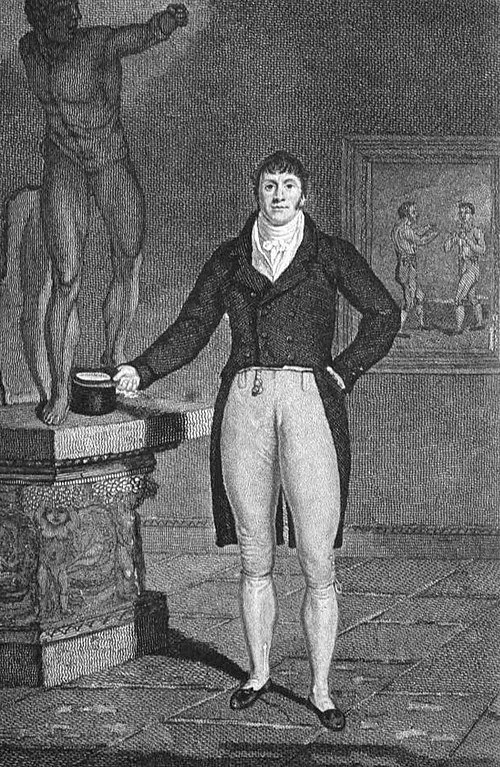
John Jackson (1769-1845)
John ‘Gentleman’ Jackson won his first fight at the age of nineteen against the veritable giant William Futrell. The Prince of Wales was present as an observer of the match that lasted an hour and seven minutes. Jackson’s second match was against George ‘The Brewer’ Ingleston, during which he sprained an ankle from slipping on the floor made dangerous by a downpour. His last fight was with Daniel Mendoza on 15 April 1795, which he won in only ten minutes. He returned with the title of Heavyweight Champion, and opened a boxing salon on Bond Street where he had many of the Alfred, Lord Byron, who was also a close friend. Jackson died at the age of seventy-seven on 9 October 1845, a well-liked and respected man.
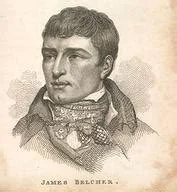
James (Jem) Belcher (1781-1811)
Jem Belcher was the 20th heavyweight champion of England and the grandson of Jack Slack, England’s 5th heavyweight champion. He was known for his agility and his ability to hit quickly, and earned the name “The Napoleon of the Ring”. Belcher’s first bout was in 1798 when he defeated Jack Britton. Belcher’s second fight was against Jack Bartholomew--a match that was declared a draw at 51 rounds. In a 17-round rematch, Belcher triumphed over Bartholomew, and gained the heavyweight title for himself. During a racquet match in 1803, Belcher lost an eye when a ball struck him,
then lost to Henry Pearcy in an 1850s boxing match. His last fights were unsuccessful ones—both against Tom Cribb—in 1807 and 1809. The last defeat was the most devastating in that Belcher wagered his entire fortune on his own victory. He died a broken man at the age of 30 in 1811.

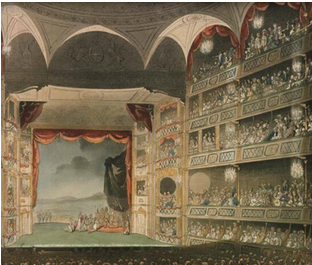
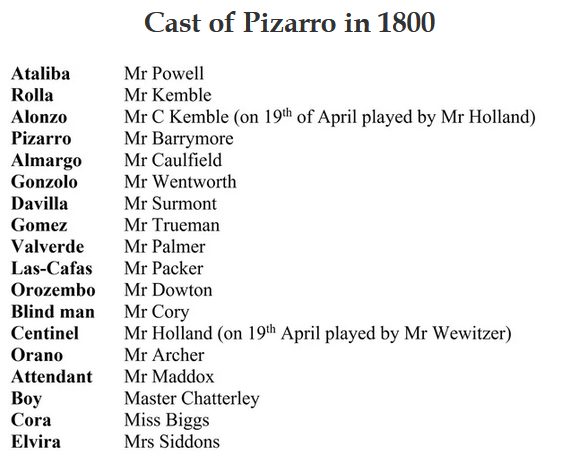
Performances at the Drury Lane Theatre in April 1800

MAIN COMPANY OF ACTORS
Mr Powell, Mr Kemble, Mr C Kemble, Mr Barrymore, Mr Caufield, Mr Wentworth, Mr Surmont, Mr Palmer, Mr Packer, Mr Cary, Mr Archer, Mr Maddocks, Mrs Siddons, Mrs Crouch, Miss Biggs, Miss De Camp, Miss Leak, Miss Menage, Mrs Stephens
Note: As the script for Of Age Tomorrow could not be found by the author, the performances for the 5th of April were substituted for the 19th. The main performances are in bold. This information is used by permission of Keith Lodwick of the Theatre Museum, Tavistock Street, London.