The Lobsterman
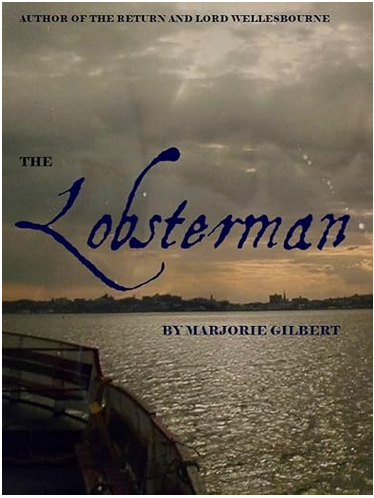
Buy The Lobsterman at Amazon and Poland Provisions
In 1765, Gavin O'Connell's ship sinks 100 miles off the coast of Maine. As death nears, a creature appears and brings him to shore. Gavin becomes a foremost citizen of Portland and witnesses the destruction of his adopted city, as well as helping to defend it during the Revolutionary War. Throughout his life, his love for what saves him endures—even through his marriage to another.
In present-day Portland, Ann Caldwell tends her traps alone on Casco Bay. One evening, a trap line becomes entangled, and Ann is astounded when she pulls in something from fairy tales. He has a feral beauty, the line between man and beast not easily defined, and possesses the power to capture Ann's heart and mind. He saves Ann from the unwanted attentions of another lobsterman, and from involvement in a drug-running plot.
Alternating between the past and present, The Lobsterman tells the story of an eighteenth-century sailor and a modern-day female lobsterman, and the place they call home: Portland, Maine.
Portland, Maine
The historic Portland, Maine was far different from the Portland, Maine of today. This can be represented by a map created by the Osher Map Library:
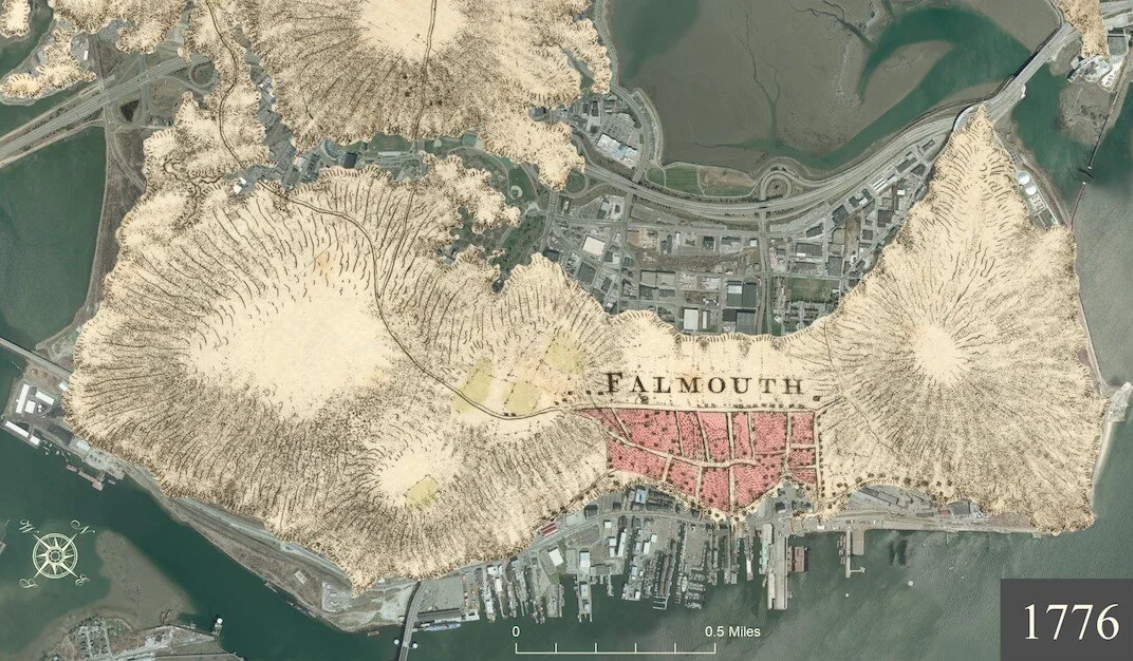
Portland’s waterfront in 1776. Courtesy of Rosemary Mosher and Osher Map Library.
The historic Portland, then known as Falmouth or Falmouth Neck, would have looked like this:
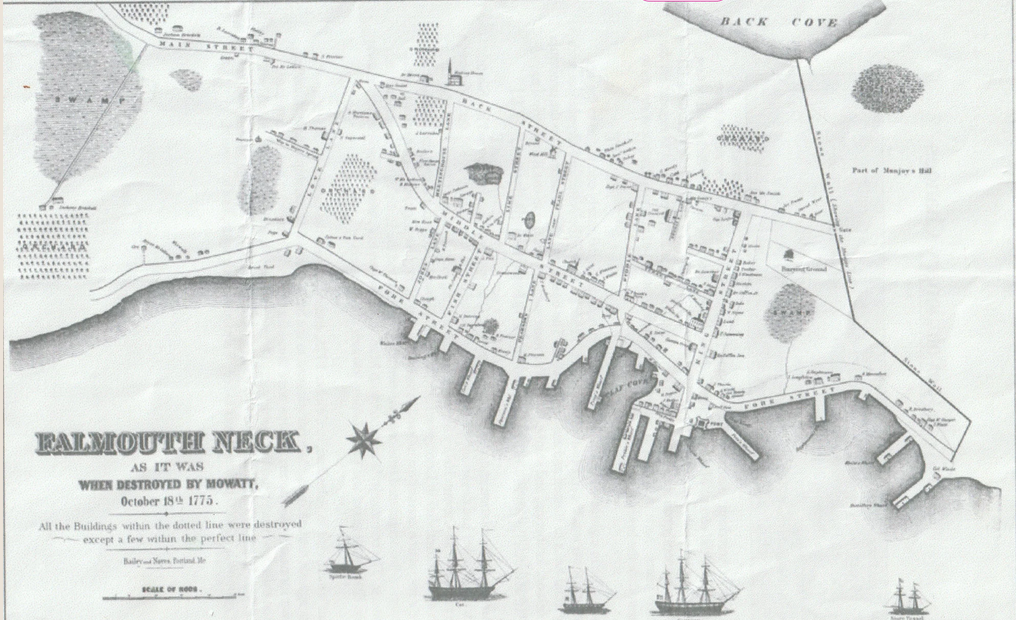
And on the day of Mowatt’s attack:
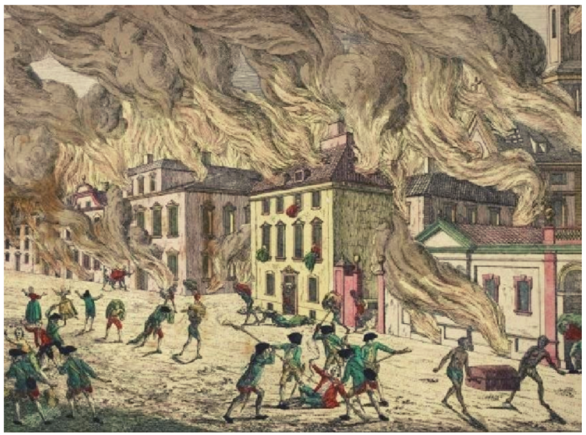
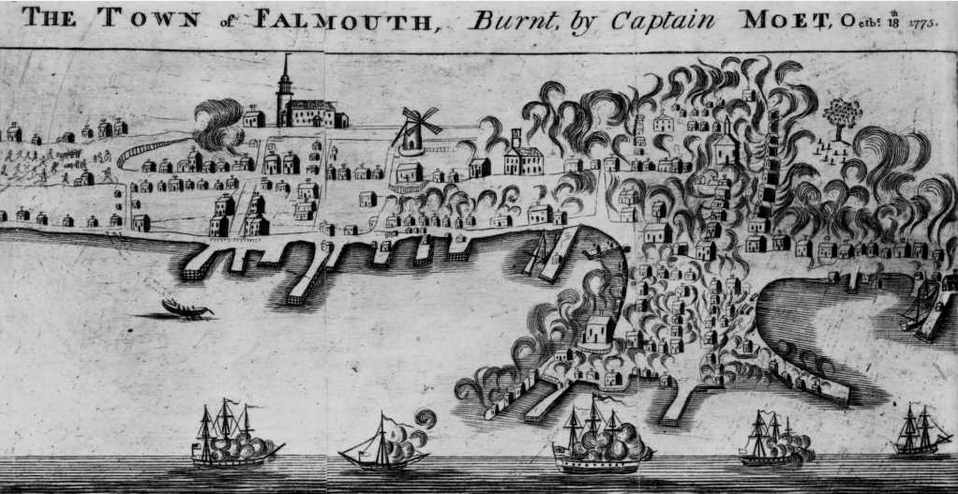
The burning of Portland, then Falmouth Neck, by Mowatt was precipitated by his and his surgeon’s capture by Col. Thompson of Brunswick, who was anxious to keep the location of his secret encampment from the people of Falmouth Neck. After much discussion, General Preble and Col Freeman convince Thompson to allow Mowatt to go free and "pledge themselves for them" [The Burning of Falmouth 1775] Instead of honoring this pledge, Mowatt and his surgeon left and sailed from Falmouth Neck. Many consider Mowatt's return on 16 October 1775 as an act of revenge for his brief and, to him embarrassing, imprisonment.
Instead of benefiting from this attack, Mowatt and his commander, Vice-Admiral Graves, both suffer. Graves is relieved of his command and Mowatt's ship, not built for the sustained gunnery attack and its guns became, for all intent and purposes. inoperable. He died of apoplexy in April 1798.
The attack on Falmouth Neck, and its nearly complete destruction on the eve of winter, outraged the members of the Continental Congress and many consider the attack, among other British attacks, as a declaration of war by the British [The Burning of Falmouth, 1775: A Case Study in British Imperial Pacification].
The Tate House
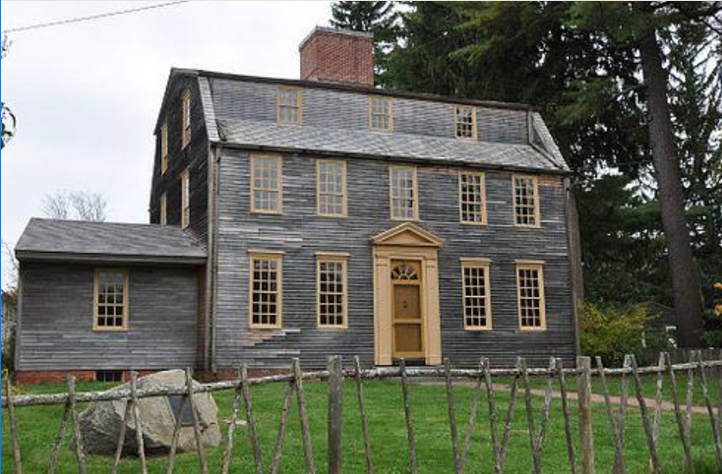
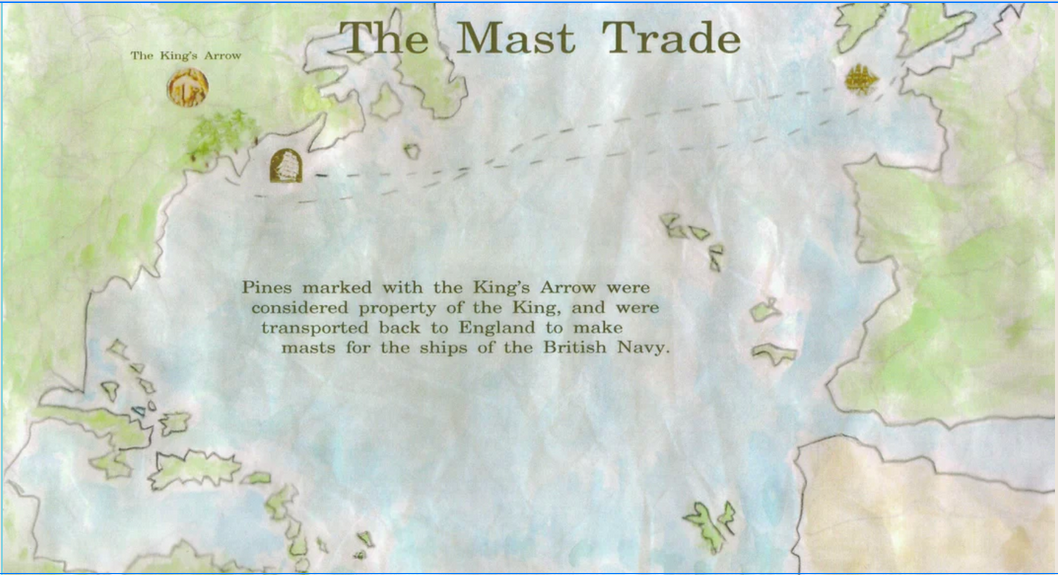
Captain George Tate built the house in 1755 for his beloved wife, Mary, in the style of a London townhouse. Tate was quite clever in his choice of the house's location: the mast yard was located on the Fore River which was too shallow for the passage of a ship--thus making the theft of the masts more difficult. Tate was a mast agent for England, which meant that he processed trees from the surrounding area, turning them into masts, which were then shipped to Britain for their navy.
Copyright 2025 Marjorie Gilbert
Mary Tate died much as described in Chapter Thirteen of The Lobsterman. While there was theft of the storehouse, it was only after Mrs Tate's death that the tunnel beneath the storehouse's floor was discovered.
It is still possible to visit the Tate House in Stroudwater, Maine, and have tea in the lovely gardens behind the house that slope down to the Stroudwater River.